

Mission & Vision
Mission & Vision
CCE Vision: |
||
|---|---|---|
|
Students of integrity who lead with purpose, empathy and serve with heart |
||
CCE Mission: |
||
|
To nurture civic-minded and compassionate citizens rooted in strong values and cultural identity |
Character and Citizenship at the Heart of Learning
At Maha Bodhi School, Character and Citizenship Education (CCE) lies at the heart of our efforts to nurture students who uphold strong values, care for others and contribute meaningfully to society. Anchored in the school vision of “Inspired Learners of Exemplary Character,” the CCE Department strives to nurture students of integrity who lead with purpose and empathy while serving others with heart.
Aligned with the school mission of nurturing confident lifelong learners and compassionate contributors with a deep connection to Chinese culture, our CCE programmes develop civic-minded and compassionate citizens grounded in strong values and cultural identity.
Through purposeful learning experiences and authentic opportunities for action, students internalise values, strengthen relationships and grow into responsible individuals who contribute positively to society.
Alignment to CCE 2021 Curriculum and 21st Century Competencies
Guided by our department’s vision and mission, the school’s CCE programmes are aligned with the CCE 2021 Curriculum and the development of 21st Century Competencies, equipping students with the dispositions and skills needed to navigate an increasingly complex world.
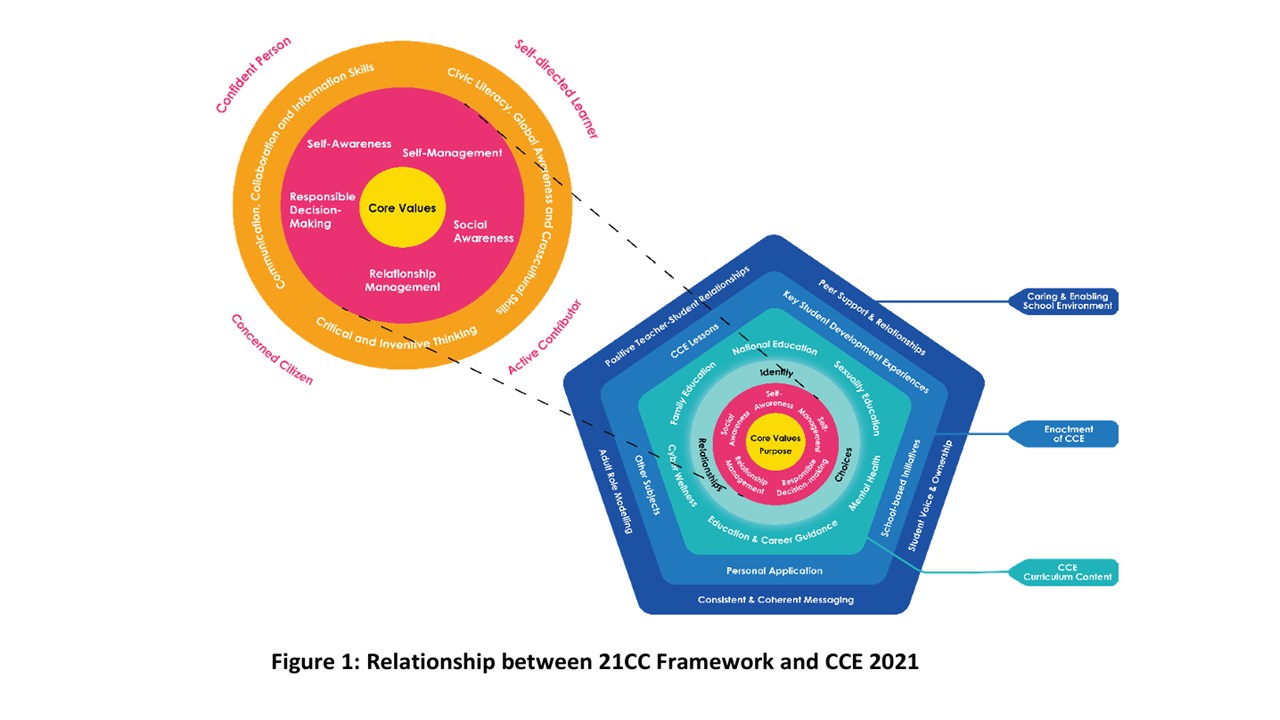
Organised around three key ideas of Identity, Relationships and Choices, our curriculum guides students in understanding themselves, building positive relationships and making responsible decisions.
At the heart of CCE are the shared values of Respect, Responsibility, Resilience, Integrity, Care and Harmony, which guide students to act with integrity, show care for others and contribute positively to their communities.
Through explicit teaching, authentic learning experiences and everyday teachable moments, students develop self-awareness and self-management, strengthen their social awareness and relationship management, and learn to practise responsible decision-making. Through these experiences, they grow as confident persons, active contributors and concerned citizens.
Focus Area 1: Character Building
1. Positive Education through the HEARTS Framework
Character education focuses on nurturing students’ values, well-being and sense of purpose. Through intentional structures and meaningful learning experiences, students develop the dispositions, social-emotional competencies and resilience needed to thrive in school and life.
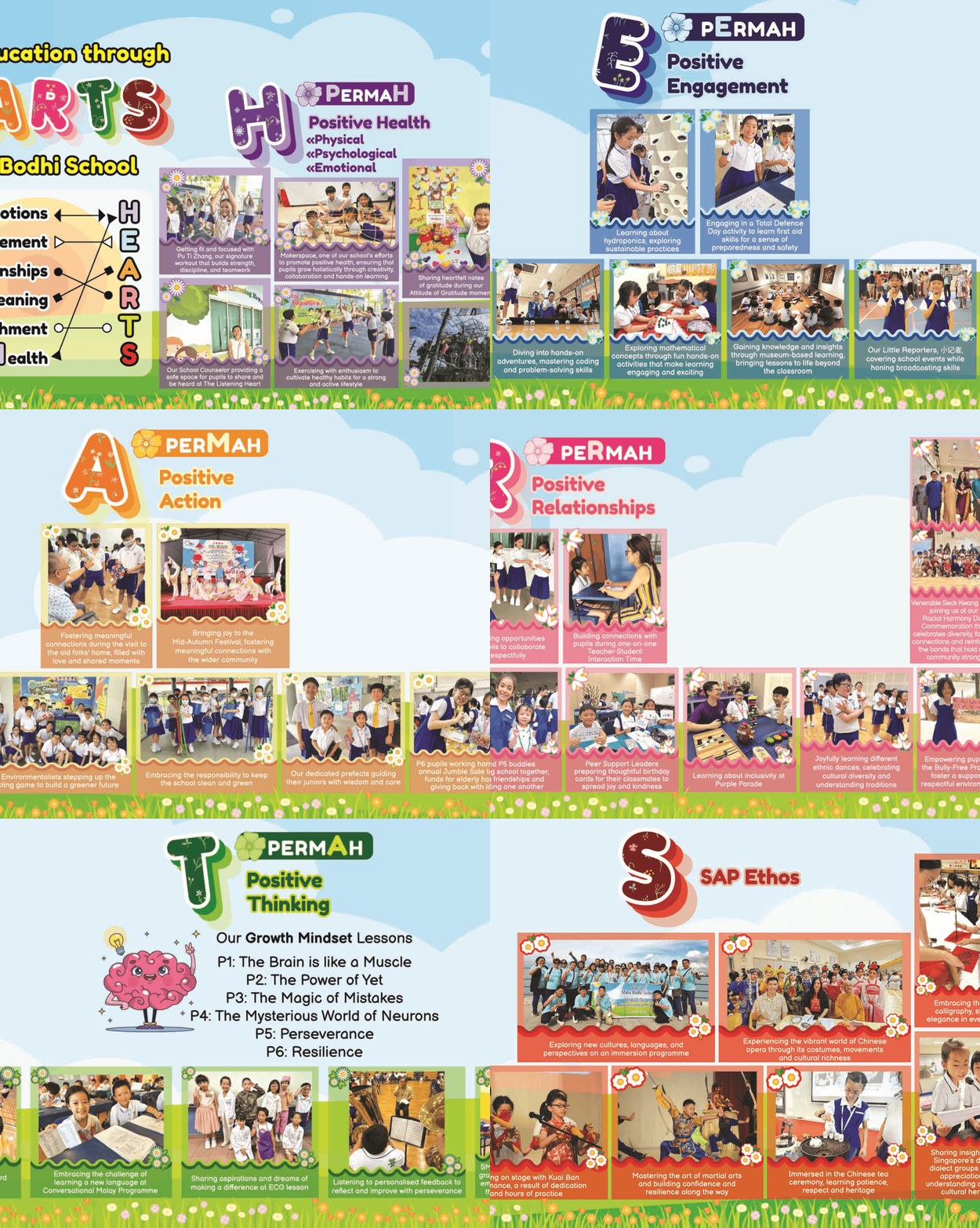
At Maha Bodhi School, Positive Education is enacted through the HEARTS Framework, which shapes how students experience well-being, belonging and character development in their daily school lives.
Guided by the PERMAH framework, HEARTS focuses on:
-
Positive Health and Engagement – Creating safe and supportive environments that promote students’ well-being.
-
Positive Action – Empowering students to take initiative and contribute meaningfully through purposeful projects and service.
-
Positive Relationships – Building a caring school culture where students support and uplift one another.
-
Positive Thinking – Cultivating a growth mindset, mindfulness and resilience to navigate challenges with confidence.
-
SAP Ethos – Deepening appreciation of Chinese culture while strengthening understanding of Singapore’s multicultural identity.
Through HEARTS, Maha Bodhi School fosters a caring and empowering environment where every student can flourish as a confident and compassionate learner.
2. Education and Career Guidance (ECG) @ Maha Bodhi School
Education and Career Guidance (ECG) complements the CCE curriculum by helping students develop self-awareness, discover their strengths and explore possibilities as they grow in purpose and character.
At Maha Bodhi School, ECG is guided by the framework of Discovering Purpose, Exploring Opportunities and Staying Relevant. Students deepen their understanding of their interests, values and strengths while appreciating how different occupations contribute to society.
The ECG journey unfolds progressively across the primary years:
-
Primary 1–2: Exploring creative industries through design activities and reader’s theatre.
-
Primary 3: Learning about healthcare professions through role-play and first-aid awareness.
-
Primary 4: Deepening self-awareness through reflection and dialogue with professionals.
-
Primary 5–6: Exploring education pathways through MySkillsFuture, secondary school talks and alumni sharing.
Through these experiences, students connect their strengths and interests with their aspirations while developing adaptability, resilience and a stronger sense of purpose.
3. Nurturing an Attitude of Gratitude
Cultivating gratitude is an important aspect of character development at Maha Bodhi School. Students learn to appreciate the contributions of those around them and recognise the value of kindness and service.
Through school programmes and everyday interactions, students express appreciation to both teaching and non-teaching staff who support them. A meaningful tradition is the Teachers’ Day Tea Offering, where students honour their teachers through a ceremony rooted in Chinese cultural values.
These experiences nurture humility, respect and gratitude, shaping students who appreciate others and are committed to caring for and serving the community.
Focus Area 2: Citizenship & Civic Responsibility
4. Values-in-Action (VIA) @ Maha Bodhi School
Citizenship education provides meaningful opportunities for students to understand their role in the community and nation while empowering them to contribute positively to society.
At Maha Bodhi School, VIA is structured as a progressive developmental journey across the primary years, aligned with MOE developmental milestones. This developmentally staged journey strengthens a caring and enabling school culture where every student learns to contribute meaningfully.
Lower Primary (P1–P2): Building Self and Immediate Care:
Students develop self-awareness, responsibility and care within their immediate circles through projects such as Project I Can and Project I Care. Structured and scaffolded experiences help students cultivate empathy and positive habits as they learn to care for family members, peers and the school community.
Middle Primary (P3–P4): Expanding to Community Contribution:
Through initiatives such as Project We Can and Project We Care, students extend their care beyond themselves to the wider community. With teacher guidance, they learn to work collaboratively to conceptualise and carry out projects that support meaningful causes, including caring for the environment and appreciating members of the community.
Upper Primary (P5–P6): Leading for Social Impact:
Students take on greater ownership of their learning through projects such as Integrated Project Work (IPW) on Sustainability and Project Pay It Forward. These student-driven initiatives encourage students to address community needs, strengthening their sense of agency, leadership and responsibility in contributing to society.
Through this progressive VIA journey, students move from caring for themselves and their immediate circles to contributing actively to the community, growing into socially aware individuals who seek to make a positive difference.
5. Commemoration of NE Core Events
Citizenship education is strengthened through the commemoration of National Education (NE) Commemorative Days, including Total Defence Day, International Friendship Day, Racial Harmony Day and National Day.
These platforms deepen students’ understanding of Singapore’s history, multicultural identity and shared responsibility in safeguarding the nation’s future while strengthening their sense of belonging as citizens.
6. Developing Student Voice and Civic Awareness
Beyond national awareness, Maha Bodhi School encourages students to engage thoughtfully with contemporary issues and develop the confidence to express their perspectives.
Through the Hear Me Out programme, students participate in guided discussions on current issues. National Education (NE) Ambassadors play an active role in facilitating these conversations, leading peers to explore different viewpoints and reflect on issues that impact society. Dialogue and reflection help students listen to diverse perspectives, articulate their ideas and consider the impact of their choices on others.
Through these experiences, students develop confidence and civic awareness to engage constructively with societal issues and contribute as active citizens.
Nurturing Character and Citizenship
Through the CCE Department’s intentional efforts to develop both character and citizenship dispositions, students grow as values-driven and socially responsible individuals. These experiences empower them to care for others, engage thoughtfully with society and contribute meaningfully to the community and nation.